
ANDALUCIAPREMIUM
Request an offer
FertilizersSteelPrecious metalsTimberPetroleum products GuidesFAQHow we workAbout usContact Request an offer
ENESDE
  1. Home
  2. Guides
  3. Guide · Timber
Guide · Timber

Timber suppliers: how to buy wood wholesale by the container

A local timber yard and an import supplier serve very different needs. This guide explains which wood species and product forms are traded, how sawn timber is graded and measured, how to check a timber supplier and what a wholesale enquiry should contain.

Last updated: October 20265 min readAndalucia Premium

In brief

Local timber yards sell small quantities cut to size; import suppliers and brokers handle container, wagon and vessel lots.

Sawn timber is described by species, dimensions, grade, moisture content and treatment, and measured mostly in cubic metres.

A timber supplier is checked on company data, origin, valid FSC/PEFC certificates, samples and independent inspection.

Timber supplier near me or import supplier: what is the difference?

A local timber yard sells from stock, cuts to size and serves small orders during opening hours. An import supplier or broker arranges full containers, wagons or vessel lots directly from sawmills and producers.

AspectLocal timber yardImport supplier / broker
QuantitySingle boards to a few cubic metresContainer, wagon or vessel lots
ServiceStock, cutting to size, collectionSourcing, contract, inspection, logistics
Lead timeImmediate from stockProduction and shipping time
BuyersTrades, DIY, small buildersDistributors, manufacturers, builders’ merchants, pallet makers

Andalucia Premium works on the import side only: we have no yard, no stock and no cutting service, and we connect verified buyers with verified suppliers for container and larger quantities.
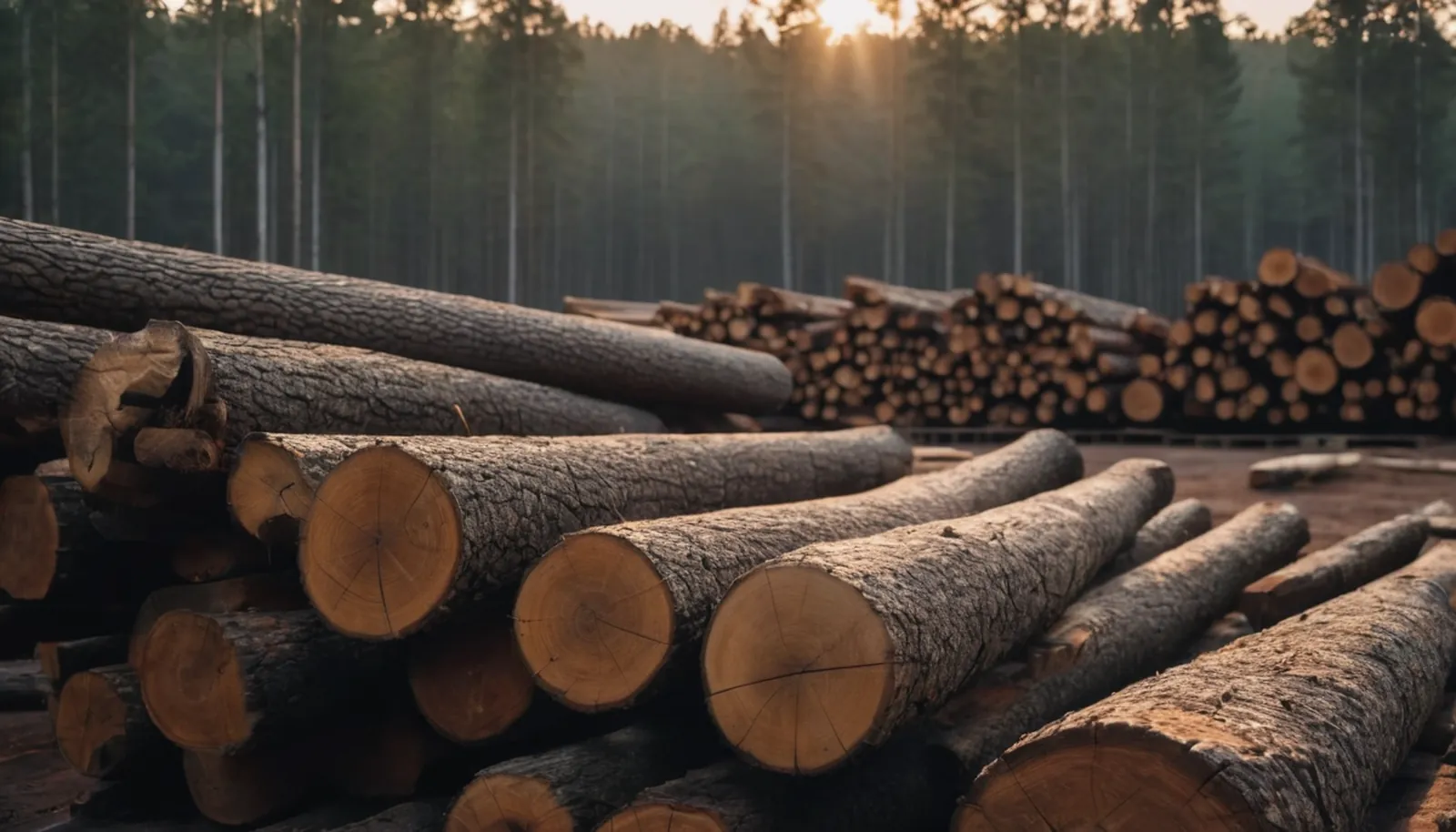
Which wood species do timber suppliers trade most?

In Europe, softwoods such as spruce, fir and pine dominate construction and packaging timber. Hardwoods such as oak, beech and ash are used for furniture, flooring and joinery; tropical species require proof of legality.

  • Spruce and fir: the main European construction softwoods, light and easy to work.
  • Pine: in Spain mainly radiata pine, maritime pine (pinaster) and Scots pine (silvestre); used for construction, pallets, packaging and boards.
  • Oak: hard and durable, for furniture, flooring, joinery and barrels.
  • Beech: hard, even texture, for furniture, interiors and plywood.
  • Ash: tough and elastic, for furniture, flooring and handles.
  • Tropical hardwoods: only with documented legal origin and, where listed, CITES permits.

Import rules such as EUDR, FLEGT and CITES are covered on our timber sector page.

Which timber products can you buy wholesale?

Timber is traded as roundwood, sawn timber, engineered wood, packaging timber and wood fuel. Each form has its own specification and unit.

  • Roundwood (logs): unprocessed stems, sold by species, length and diameter.
  • Sawn timber: boards, planks and squared timber, rough-sawn or planed.
  • Structural timber: strength-graded sections and engineered products such as glued laminated timber (glulam).
  • Pallet and packaging timber: boards and blocks cut to pallet dimensions.
  • Wood pellets: fuel pellets, usually certified to ENplus.

Panels such as plywood, OSB and MDF are described on the timber page.

How are sawn timber suppliers’ grades defined?

Sawn softwood is graded either by appearance, for example under EN 1611-1, or by strength for structural use. Structural strength classes such as C16 and C24 are defined in EN 338.

Appearance grading looks at knots, cracks, resin pockets, wane and discolouration. Strength grading for load-bearing use is done visually or by machine under EN 14081 and assigns a strength class from EN 338; C24 has higher characteristic strength than C16. Hardwoods have their own grading rules. Many sawmills also use traditional grade names; in a contract, the standard, the grade and the permitted defects should be written out explicitly.

Which units and tolerances apply to timber?

Sawn timber is usually priced and invoiced per cubic metre (m³). Roundwood is often measured in solid cubic metres, firewood in stacked cubic metres, and in North America lumber is sold in board feet.

UnitMeaning
m³Cubic metre of sawn timber, calculated from nominal dimensions
Solid cubic metre1 m³ of solid wood without gaps, common for roundwood
Stacked cubic metre1 m³ of stacked wood including air gaps
Board foot12 × 12 × 1 inch, about 2.36 litres of wood

The contract should state whether volume refers to green or dried dimensions, the permitted dimensional tolerances and how lengths are mixed within a package.

Why do moisture content and drying matter when buying timber?

Wood shrinks and moves as it dries, and wet timber can develop mould or blue stain in transit. The moisture content agreed in the contract, for example kiln-dried to a stated percentage, should be checked on arrival.

KD/AD, heat treatment under ISPM 15 and container stowage are explained on the timber sector page. For a purchase, the key points are the target moisture range, how it is measured and what happens if the delivery falls outside it.

How to choose timber suppliers: which checks matter?

Check the company and its ownership, the origin of the wood, the validity of any FSC or PEFC certificate in the official certificate databases, samples and an independent inspection before or at loading.

  1. Company: registration, ownership and sanctions screening, see our KYC guide.
  2. Origin: harvest country and region, with documents that support due diligence.
  3. Certificates: certificate number, holder, scope and expiry, checked in the public FSC or PEFC database; the product must be covered by the scope.
  4. Samples and photos: of the actual grade and dimensions offered.
  5. Inspection: quantity, grade, moisture and packing checked by an independent inspector, see our inspection guide.
  6. Phytosanitary documents: where required for the product and route.

Timber supplies online: can you buy wood wholesale on the internet?

For small quantities there are online shops, but wholesale timber is bought by enquiry and contract. Price, grade, volume, delivery terms and inspection are agreed for each lot.

A useful enquiry contains:

  • Species and product form
  • Dimensions (thickness × width × length) and tolerances
  • Grade and standard, e.g. appearance grade or strength class
  • Moisture content and any treatment
  • Certification required (FSC, PEFC) and documents
  • Volume per shipment and frequency
  • Packing, destination and preferred Incoterms®

You can send this through our contact page.

Last updated: October 2026This page provides general information about trade practice. It is not legal, tax or investment advice.

FAQ

Frequently asked questions

Commodity trading questions, answered

How do timber suppliers set their price?

The price depends on species, grade, dimensions, moisture content, certification, volume, packing, freight and market conditions at the time of the offer. We do not publish price lists; a price is quoted for a specific transaction.

Can I collect wood or have it cut to size?

Not from us. Andalucia Premium has no yard, no stock and no cutting service; for small quantities cut to size, a local timber yard is the right contact.

What is the difference between C16 and C24 timber?

Both are strength classes for structural softwood under EN 338. C24 has a higher characteristic bending strength than C16 and is used where higher loads or longer spans are required.

What is a board foot?

A North American unit of lumber volume: a piece 12 inches long, 12 inches wide and 1 inch thick, which is about 2.36 litres or 0.00236 cubic metres.

How can I check an FSC or PEFC certificate?

Look up the certificate number in the public database of FSC or PEFC and check the holder, status, expiry date and whether the product group is covered by the scope.

Which documents come with a timber shipment?

Typically commercial invoice, packing list, bill of lading or transport document, certificate of origin, certification claims on the invoice where applicable and, depending on product and route, a phytosanitary certificate and legality documents.

Where do sawn timber suppliers in Spain source their wood?

Spanish forestry relies largely on pine and eucalyptus, with significant plantations in the north-west such as Galicia, Asturias and Cantabria; part of the demand is covered by imports.

Sectors

What we broker

Contact

Do you have a requirement or an offer?

Tell us the product, specification, quantity, delivery window and destination port. We will reply personally with the next steps.

Request an offer
Request an offer