
ANDALUCIAPREMIUM
Request an offer
FertilizersSteelPrecious metalsTimberPetroleum products GuidesFAQHow we workAbout usContact Request an offer
ENESDE
  1. Home
  2. Guides
  3. Guide · Fertilizers
Guide · Fertilizers

Urea fertilizer 46% nitrogen: a guide for bulk buyers

Urea is the most widely traded nitrogen fertilizer. Here is what the 46% stands for, how granular and prilled urea differ, how it is manufactured and what determines the price of a bulk cargo.

Last updated: October 20264 min readAndalucia Premium

In brief

Urea contains 46% nitrogen, the highest nitrogen content of the common solid fertilizers.

It is made from ammonia and carbon dioxide and sold as granular or prilled product.

The bulk price per ton depends on gas costs, season, origin, freight, packaging and trade rules.

What is urea fertilizer?

Urea is a solid nitrogen fertilizer with the chemical formula CO(NH₂)₂. It is used worldwide in agriculture because it supplies a high amount of nitrogen per tonne transported.

In the soil, urea is converted into ammonium and then nitrate, which plants take up. Besides agriculture, urea is also used industrially, for example in resins and, as a high-purity solution, in exhaust treatment for diesel engines (sold under names such as AdBlue®).
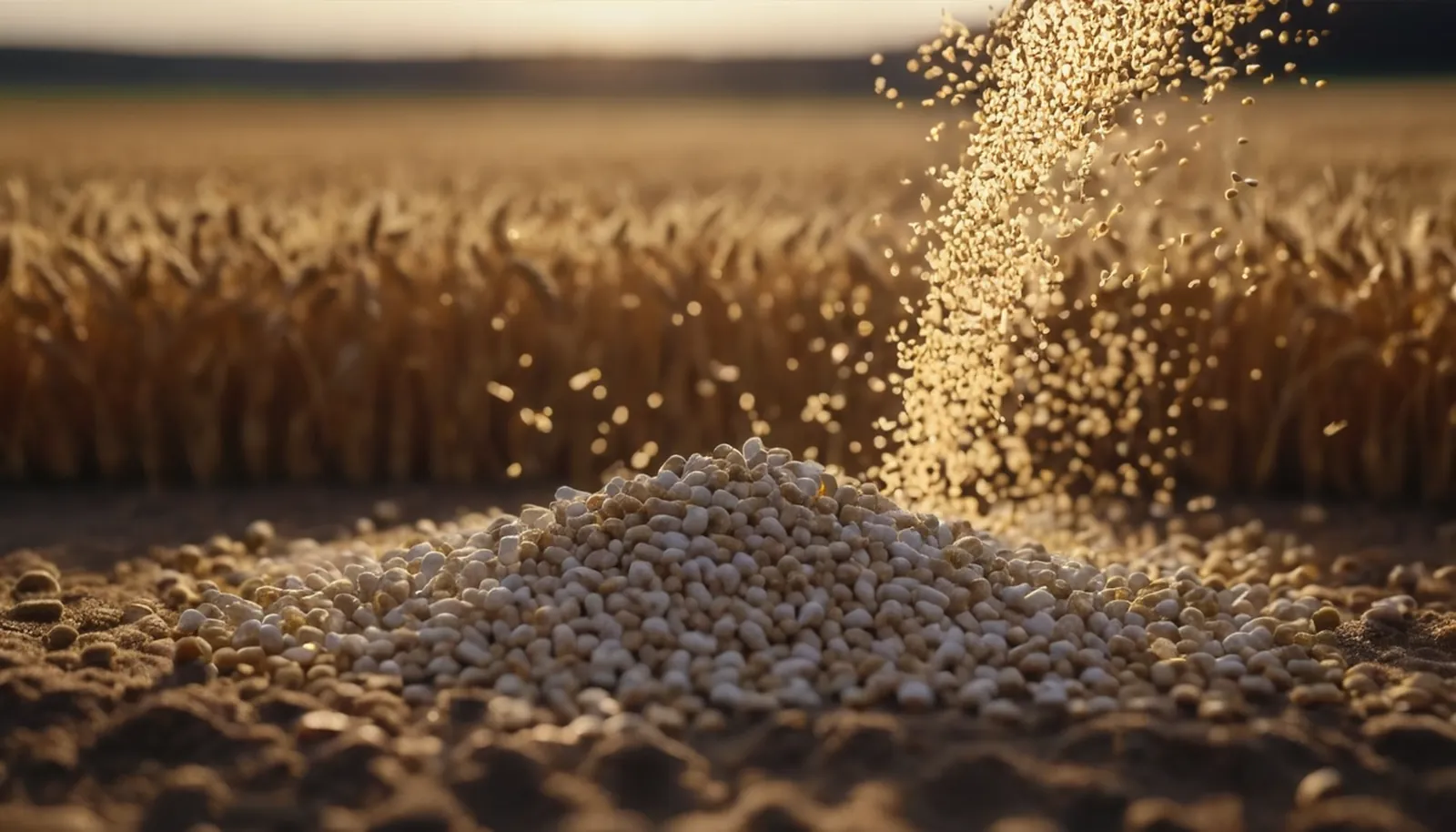
What does urea 46% nitrogen mean?

The figure means that urea contains at least 46% nitrogen by weight. In specifications this is usually written as “nitrogen min. 46%”.

A typical commercial specification for fertilizer-grade urea also covers biuret, moisture and particle size, for example:

ParameterTypical specification
Nitrogenmin. 46%
Biuretmax. 1.0%
Moisturemax. 0.5%
FormGranular or prilled, size range stated in the contract

The binding values are those in the contract and confirmed by the independent certificate of quality.

Why is urea used as a fertilizer?

Because it delivers a lot of nitrogen per tonne, is easy to store and transport when kept dry, and can be applied directly or blended with other fertilizers.

Nitrogen is the nutrient crops need in the largest quantity. The high nitrogen content keeps freight and handling costs per unit of nutrient low. On the field, urea that stays on the surface can lose nitrogen to the air as ammonia, which is why it is often incorporated into the soil or used with urease inhibitors.

Granular vs prilled urea: what is the difference?

Both have the same nitrogen content. Granular urea has larger, harder particles and less dust, while prilled urea has smaller, rounder particles formed in a prilling tower.

  • Granular urea: larger particles, robust in handling, well suited to long sea voyages, bulk blending and spreading over wide widths.
  • Prilled urea: smaller particles, often used for direct application and in industry; more sensitive to breakage and dust.

The particle size range should be stated in the contract and confirmed by the inspection.

How is urea fertilizer made?

Urea is made by reacting ammonia with carbon dioxide under high pressure. The ammonia itself is produced from nitrogen and hydrogen, the hydrogen usually coming from natural gas.

  1. Natural gas provides hydrogen; ammonia is synthesised from hydrogen and nitrogen from the air.
  2. Ammonia reacts with carbon dioxide, often from the ammonia plant itself, to form ammonium carbamate.
  3. The carbamate is dehydrated to urea.
  4. The urea melt is turned into solid product in a prilling tower or a granulator.

Because natural gas is the main input, urea is mostly produced in regions with access to gas.

Bulk or bags: how is urea delivered?

Urea is delivered in bulk vessels, in big bags or in smaller bags on pallets, by sea, rail or truck. The choice depends on volume, port facilities and how the buyer distributes the product.

FormSuits
Bulk vesselLarge volumes, ports with bulk handling and storage
Big bagsMedium volumes, distributors, ports without bulk storage
Small bagsRetail distribution and direct sale to farms
ContainersSmaller lots and destinations without bulk terminals

Urea absorbs moisture from the air, so dry storage and careful handling are essential to prevent caking.

Where can you buy urea in bulk?

Bulk urea is bought from producers or trading houses, usually by contract per cargo or under a term agreement. Large producers are concentrated in regions with natural gas, such as the Middle East and North Africa.

Importers in Europe usually buy CFR or CIF to a European port, or FOB when they charter vessels themselves. Before any offer, both sides should be verified, the origin checked against sanctions and trade measures, and inspection and payment agreed. Urea is not bought in bulk through a webshop: cargo trade works through contracts between verified companies.

What drives the bulk urea price per ton?

The main drivers are natural gas costs, seasonal demand in the large consuming regions, export policies of producing countries, freight and the trade rules of the destination, such as duties and CBAM.

  • Energy: gas is the key cost in ammonia and urea production.
  • Season: demand peaks before the planting seasons in the major markets.
  • Supply policy: export restrictions or tenders in large countries move the market.
  • Logistics: freight, port costs, packaging and Incoterms® rule.
  • Trade rules: duties, sanctions and CBAM costs for imports into the EU.

We do not publish prices; a price is quoted for a specific, verified transaction.

Last updated: October 2026This page provides general information about trade practice. It is not legal, tax or investment advice.

FAQ

Frequently asked questions

Commodity trading questions, answered

Can you buy urea fertilizer online?

Small bags are sold online for gardens and farms, but bulk urea is traded by contract between verified companies, with inspection and bank-secured payment.

Which raw materials are used in the manufacture of urea fertilizer?

Mainly natural gas, nitrogen from the air and carbon dioxide. Gas supplies the hydrogen for ammonia, which then reacts with carbon dioxide to form urea.

How should bulk urea be stored?

Dry, covered and protected from humidity, because urea absorbs moisture and can cake. Storage conditions should also follow local safety and environmental rules.

Is urea the same as AdBlue®?

No. AdBlue® is a solution of high-purity urea in demineralised water used for exhaust treatment in diesel engines; fertilizer-grade urea is a solid product with a different specification.

Which documents come with a urea cargo?

Typically commercial invoice, bill of lading, certificate of origin, certificates of quality and quantity from an independent inspector and, for EU imports, the documents needed for customs and CBAM reporting.

Does CBAM apply to urea imports?

Yes. Nitrogen fertilizers such as urea are within the scope of the EU carbon border adjustment mechanism; importers should check the current obligations for their imports.

Sectors

What we broker

Contact

Do you have a requirement or an offer?

Tell us the product, specification, quantity, delivery window and destination port. We will reply personally with the next steps.

Request an offer
Request an offer