ANDALUCIAPREMIUM
Request an offer
FertilizersSteelPrecious metalsTimberPetroleum products GuidesFAQHow we workAbout usContact Request an offer
ENESDE
Fertilizers
  1. Home
  2. Sectors
  3. Fertilizers
Sector · Fertilizers

Urea fertilizer 46% nitrogen and bulk fertilizers from verified suppliers

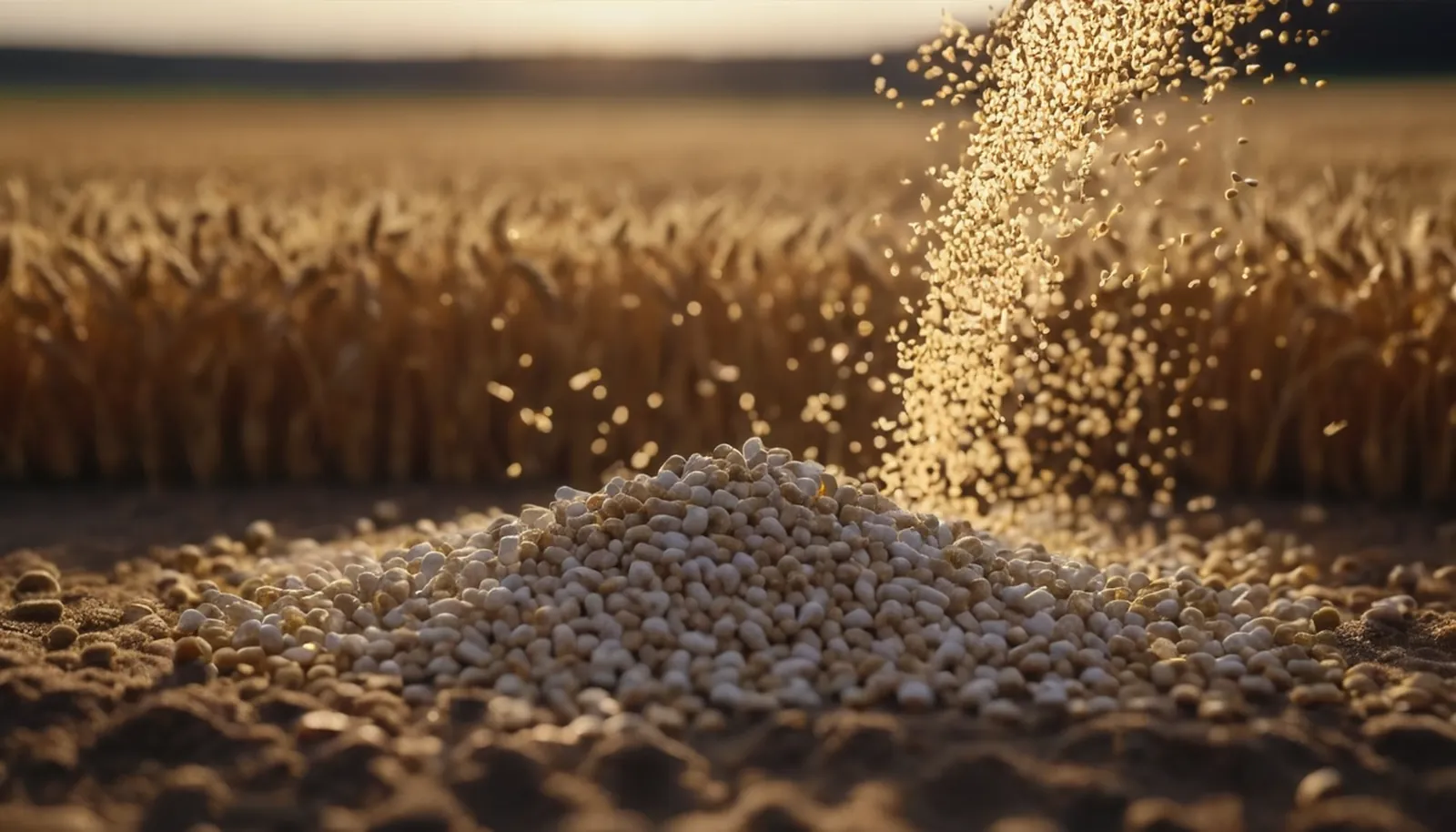
We broker nitrogen, phosphate and potash fertilizers between producers, trading houses and importers, in bulk vessels, big bags or containers.

In brief

Main products: urea 46% N, NPK blends, DAP/MAP, potash (MOP) and ammonium sulphate.

Quality and quantity are confirmed by independent inspection at the port of loading.

Since 2026, fertilizer imports into the EU have been subject to the definitive phase of CBAM, which we take into account when structuring deals.

How do you buy bulk urea fertilizer from a supplier in Europe?

Bulk fertilizer is bought by contract between companies, usually in vessel lots of several thousand tonnes, or in big bags and containers for smaller quantities. The buyer defines specification, quantity, port and delivery window; the seller confirms availability and price.

For smaller lots, containers with 25–50 kg bags or 1-tonne big bags are common. We check the supplier’s capability and documentation in advance, agree Incoterms® and inspection, and accompany the transaction up to discharge.
Which documents are required for a fertilizer shipment?

Typically a commercial invoice, bill of lading, certificate of origin, certificate of quality and quantity from an independent inspector, a safety data sheet and, where required, phytosanitary or import permits.

For imports into the European Union, the EU Fertilising Products Regulation and national rules may apply in addition. Ammonium nitrate based products are subject to special security rules in many countries.

How does CBAM affect fertilizer imports into the EU?

The Carbon Border Adjustment Mechanism (CBAM) covers fertilizers such as urea, ammonia and nitric acid based products. Since 1 January 2026, EU importers of these goods must be authorized CBAM declarants, account for their embedded emissions and surrender CBAM certificates for them.

In practice, this means that emission data from the producer becomes part of the documentation. We take this into account when selecting suppliers for EU destinations. Details and current thresholds: European Commission, CBAM.

Last updated: October 2026This page provides general information about trade practice. It is not legal, tax or investment advice.

Fertilizers

Typical products

ProductSpecification
Urea 46% NGranular or prilled, nitrogen min. 46%, biuret max. 1%, moisture max. 0.5%
NPK compound fertilizerse.g. 15-15-15, 16-16-16, 20-10-10 or to buyer specification
DAP / MAPDiammonium phosphate 18-46-0, monoammonium phosphate 11-52-0
Potash (MOP)Potassium chloride, K₂O min. 60%, granular or standard
Ammonium sulphateN 21%, S 24%, crystalline or granular
FAQ

Frequently asked questions

Commodity trading questions, answered

What is the minimum quantity for a fertilizer order?

It depends on product and mode of transport. Bulk vessel shipments usually start from several thousand tonnes; container shipments are possible from smaller quantities. Tell us your requirement and we will check what is realistic.

What is the difference between granular and prilled urea?

Granular urea has larger, harder particles and is better suited for blending and mechanical spreading. Prilled urea has smaller, rounder particles and dissolves faster. Both contain at least 46% nitrogen.

Do you supply organic fertilizers?

Our focus is on mineral fertilizers in industrial quantities. Requests for other products can be checked individually.

What is the HS code for urea?

Urea is classified under HS heading 3102.10 in the Harmonized System. National tariff lines add further digits, so the exact code should be confirmed for the import country.

What packaging is available for fertilizers?

Fertilizers are shipped in bulk, in big bags (for example 500 or 1,000 kg) or in smaller bags of around 50 kg. The packaging is agreed in the contract together with marking and palletising.

What are the typical specifications of NPK fertilizers?

An NPK grade such as 15-15-15 states the percentages of nitrogen (N), phosphate (P₂O₅) and potash (K₂O). Further specifications include granule size, moisture and, where relevant, secondary nutrients and trace elements.

What is the difference between DAP and MAP?

Both are ammonium phosphates: DAP (18-46-0) contains more nitrogen, while MAP (11-52-0) has a higher phosphate content. Which one suits depends on soil, crop and how it is blended or applied.

Are there restrictions on ammonium nitrate?

Yes. Ammonium nitrate is subject to safety rules for storage and transport and, in the EU, to rules on explosives precursors and specific requirements for high-nitrogen fertilizers. We check these requirements for each request.

Which rules apply to fertilizers placed on the EU market?

Fertilizers sold in the EU must meet product and labelling rules, either under the EU Fertilising Products Regulation (EU) 2019/1009 for CE-marked products or under national rules. Importers should check which route applies to their product.

How do sanctions affect fertilizer trade?

Fertilizers from certain countries, including Russia and Belarus, are subject to EU restrictions or additional duties. We check origin, parties and payment routes against the current rules before any offer.

What determines bulk fertilizer cost and price per ton?

The price per ton depends on product and specification, quantity, packaging, origin, the Incoterms® rule and freight, plus timing in the season. For nitrogen fertilizers such as urea, natural gas costs, export policies of producing countries and import duties or CBAM costs also play a role, so every price is quoted per transaction.

Do you work with bulk fertilizer buyers in South Africa and other African countries?

Enquiries from outside the EU are handled like any other enquiry. Whether a transaction is feasible depends on product, origin, quantity, port and the import rules of the destination country; in South Africa, for example, fertilizers are subject to registration under Act 36 of 1947. These points are checked before any offer is made.

Guides

Related guides

All guides

01

What is a commodity broker and what does a commodity broker do?

Commodity broker meaning, the tasks of a physical commodity broker, how brokerage charges usually work and broker vs trader.

Read the guide
02

Urea fertilizer 46% nitrogen: a guide for bulk buyers

What urea fertilizer is, what 46% nitrogen means, granular vs prilled, manufacture, packaging and bulk price drivers.

Read the guide
03

Types of Fertilizer: Nutrient Content of Nitrogen, Phosphate, Potash and NPK Grades

Nitrogen, phosphate, potash and NPK fertilizers with typical nutrient content, production routes and checks for bulk purchases.

Read the guide
04

Bulk fertilizer prices: how the price per ton is formed

What drives bulk fertilizer prices per ton, which public benchmarks exist, what costs come on top and how a wholesale offer is structured.

Read the guide
12

How an international commodity deal works

The typical sequence of a brokered commodity transaction, the role of each party and why the order of the steps matters.

Read the guide
13

Commodity scams: warning signs every buyer should know

How SBLC and MT760 schemes, fake EN 590 and Jet A-1 procedures and advance-fee tricks work, and how to protect yourself.

Read the guide
14

Letter of credit, SBLC, escrow and TT: paying for commodities

How letters of credit, standby letters of credit, documentary collections, escrow and bank transfers secure payment in commodity deals.

Read the guide
15

LOI, ICPO, FCO, SPA and POP: documents and red flags

What LOI, ICPO, FCO, SPA and POP mean, how genuine transactions use them and how to recognise fraudulent offers.

Read the guide
16

KYC and compliance in commodity trading

What a know-your-customer check covers, which documents are needed and how sanctions screening works in commodity trade.

Read the guide
17

Inspection and certificates in commodity trade

Who inspects bulk cargoes, how quality and quantity are measured and what COA, COO and inspection certificates prove.

Read the guide
18

Incoterms® 2020 for bulk commodities

Which Incoterms® rules fit seaborne bulk cargoes, where risk passes from seller to buyer and what to watch out for.

Read the guide
Contact

Do you have a requirement or an offer?

Tell us the product, specification, quantity, delivery window and destination port. We will reply personally with the next steps.

Request an offer
Request an offer