
ANDALUCIAPREMIUM
Request an offer
FertilizersSteelPrecious metalsTimberPetroleum products GuidesFAQHow we workAbout usContact Request an offer
ENESDE
  1. Home
  2. Guides
  3. Guide · Fertilizers
Guide · Fertilizers

Bulk fertilizer prices: how the price per ton is formed

There is no single price for fertilizer. What a bulk buyer pays per tonne depends on raw materials, season, origin, packaging, freight and trade rules. Here is how prices are formed, where public benchmarks come from and how a wholesale offer is put together.

Last updated: October 20267 min readAndalucia Premium

In brief

Bulk fertilizer prices are quoted per tonne in US dollars on a stated Incoterms® basis and are valid only for a limited time.

Nitrogen prices follow natural gas and ammonia, phosphates follow phosphate rock and sulphur, potash follows a small number of mining countries.

Season, export policy, freight, packaging, duties and CBAM decide what a cargo finally costs at the destination.

Why are there no bulk fertilizer prices today on this page?

Because a bulk price only exists for a specific transaction: a defined product, quantity, origin, delivery basis and date. We therefore quote prices only in a concrete offer, per tonne and with a limited validity.

Fertilizer markets move from week to week, and the same product can differ in price by origin, port and loading period. A figure published without these details would say little and could be misleading. When we receive a verified enquiry, the price is stated in the offer:

  • per metric tonne, usually in US dollars,
  • on a stated Incoterms® rule and named port (see our guide to Incoterms® for bulk commodities),
  • with a validity date, after which the offer has to be confirmed again.

Andalucia Premium SL does not trade on its own account and holds no stock; we connect verified companies, so the price always comes from the actual supplier side of a transaction.
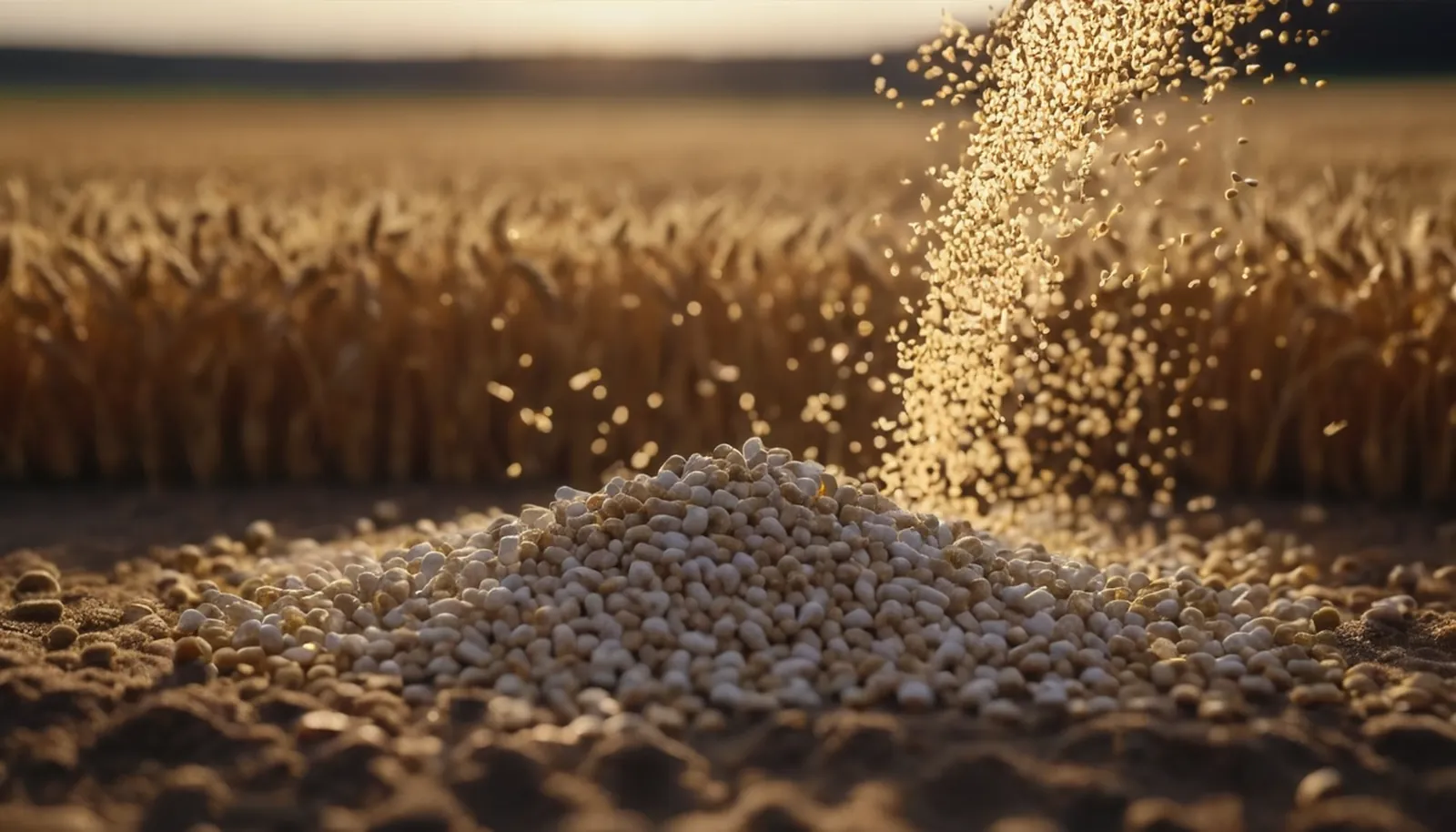
How is the bulk fertilizer price per ton formed?

The starting point is the production cost of the nutrient, which differs for nitrogen, phosphate and potash. On top come market conditions at origin, freight to the destination and the costs of the trade rules that apply there.

Fertilizer groupExamplesMain cost driver
Nitrogen (N)Urea, ammonium nitrate, UAN, ammonium sulphateNatural gas, from which ammonia is made
Phosphate (P)DAP, MAP, TSPPhosphate rock, sulphur (for sulphuric acid) and ammonia
Potash (K)Potassium chloride (MOP), potassium sulphate (SOP)Mining, concentrated in a few producing countries
CompoundNPK gradesThe prices of the nutrients they contain plus processing

For urea specifically, see our guide to urea 46% fertilizer. Because gas is the largest input for nitrogen, higher gas prices in a producing region usually raise its nitrogen prices or reduce its output.

Which factors move bulk fertilizer prices?

Besides raw materials, prices react to the farming calendar, to export policies of large producing countries, to freight rates and to the US dollar exchange rate.

  • Season: demand rises before the planting seasons, in Europe above all ahead of spring in the northern hemisphere; large import tenders in consuming countries also move the market.
  • Export policy: export restrictions, quotas or inspection rules in major producing countries, China being a frequently cited example, can tighten supply at short notice.
  • Freight: bulk freight rates, port congestion and route changes affect the delivered price.
  • Currency: international prices are mostly set in US dollars, so the euro exchange rate changes the cost for European buyers.
  • Packaging: loose bulk, big bags or 50 kg bags carry different handling and material costs.
  • Origin: distance, quality, reliability and trade measures make the same product price differently by country of origin.

Which public benchmarks show fertilizer prices?

The World Bank publishes free monthly averages for the main fertilizers in its “Pink Sheet”. Daily and weekly assessments come from paid price reporting agencies such as Argus, CRU and Profercy.

The World Bank commodity price data (Pink Sheet) includes monthly series for urea, DAP, TSP, potassium chloride and phosphate rock. It is useful for seeing long-term trends, but it is an average for a specific origin and delivery basis, not a price for your cargo.

The trade itself mostly refers to assessments from price reporting agencies. Their benchmarks are always tied to a product, a region and an Incoterm, for example granular urea FOB Egypt or FOB Middle East, or DAP FOB from a named export region. A benchmark FOB at origin is therefore not comparable with a CFR price to a Spanish port without adding freight and other costs.

How is a bulk fertilizer offer structured?

A serious offer names the product and specification, quantity with tolerance, Incoterm and port, price per tonne, payment terms, loading period, inspection and validity.

ElementWhat it states
Product and specificationFor example urea granular, nitrogen min. 46%, biuret, moisture, particle size
QuantityTonnes per shipment, with a tolerance in percent and who decides it
Delivery basisIncoterms® rule with named port, e.g. FOB loading port or CFR discharge port
PricePer metric tonne, currency, fixed or linked to an index
PaymentPayment instrument and timing, e.g. documentary letter of credit
Loading periodLaycan or shipment window
InspectionIndependent inspector, place of sampling, certificates of quality and quantity
PackagingBulk, big bags or bags, marking
ValidityDate and time until which the offer stands

An offer that leaves out several of these points is not a basis for comparing prices.

What does bulk fertilizer cost on top of the product price?

Depending on the Incoterm, the buyer also pays freight, insurance, port handling, customs duties, inspection and, for EU imports, CBAM-related costs. These items can make two similar prices very different in total.

  • Freight and insurance: included in CFR or CIF, paid separately under FOB.
  • Port and handling: discharge, stevedoring, storage, bagging at destination.
  • Customs: import duties, where applicable, and VAT in the country of import.
  • Inspection and analysis: sampling, laboratory tests, draft survey.
  • Financing: costs of a letter of credit or other bank instruments.
  • Inland transport: from the port to warehouse or farm.

A fair comparison therefore always converts offers to the same delivery point.

How do EU duties and CBAM affect fertilizer import prices?

Imports into the EU are subject to customs rules and trade measures, including progressively increasing tariffs on fertilizers from Russia and Belarus applied since 2025. Nitrogen-containing fertilizers are also covered by CBAM, whose definitive phase began on 1 January 2026.

Under the carbon border adjustment mechanism, importers of covered goods report the embedded emissions and, in the definitive phase, have to account for them with CBAM certificates. For nitrogen fertilizers this becomes part of the import calculation. Details, thresholds and current obligations are published by the European Commission on its CBAM page.

For the buyer this means: the price of a cargo from outside the EU can only be assessed together with the duties and CBAM costs that apply to its origin. We check origin and applicable trade measures before an offer is pursued.

Why does a “fertilizer for sale” price online mean little?

Online listings rarely state specification, Incoterm, port, validity or who actually holds the goods. A price far below the market is a warning sign rather than a bargain.

Many listings for bulk fertilizer for sale are posted by intermediaries who do not control the product. Typical warning signs are prices clearly below the published benchmarks, unverifiable company data, pressure for quick payment and documents offered before any contract. Our guide to commodity scam warning signs explains what to check. A verifiable offer comes from an identified company, with a contract, inspection and bank-secured payment.

How do farm prices compare with wholesale prices?

The price a farmer pays at the local distributor includes storage, distribution, small packaging, credit and margin. It cannot be compared directly with a wholesale price per tonne for a ship or container lot.

In Spain and the rest of the EU, farmers usually buy through cooperatives and agricultural distributors in bags or big bags, delivered to the farm. The importer buys bulk at the port. Between the two lie discharge, storage, bagging, transport, financing and the risk of price changes during the season. We work at wholesale level: volumes of container or vessel size between companies. Small quantities for private buyers are available from agricultural and garden retailers. Enquiries for wholesale volumes can be sent via our contact page; more about the sector on our fertilizers page.

Last updated: October 2026This page provides general information about trade practice. It is not legal, tax or investment advice.

FAQ

Frequently asked questions

Commodity trading questions, answered

What is the urea price per ton today?

We do not publish daily prices. Urea is quoted per tonne for a specific transaction, origin and Incoterm; the World Bank Pink Sheet shows free monthly averages for orientation.

Where can I find bulk fertilizer for sale?

Bulk fertilizer is sold by producers and trading houses under contract. We connect verified companies for container and vessel volumes and do not sell from our own stock.

Why is fertilizer in big bags more expensive than in bulk?

Bags and big bags add material, filling, handling and often freight costs per tonne. Loose bulk is usually the cheapest form per tonne but needs ports with bulk handling and storage.

In which currency are bulk fertilizer prices quoted?

International fertilizer trade is mostly quoted in US dollars per metric tonne. Some offers within Europe are made in euros; the contract states the currency.

How long is a fertilizer offer valid?

Usually only for a short, stated period, because markets move. After the validity date the supplier has to confirm the price again.

Is a fertilizer price far below the market a good deal?

Usually not. Prices clearly below published benchmarks are a common sign of fraudulent offers; company, documents and payment terms should be checked first.

Does CBAM make imported fertilizer more expensive?

For nitrogen-containing fertilizers imported into the EU, CBAM adds a cost linked to embedded emissions since the definitive phase began in 2026. The amount depends on the product, the production route and the certificate price.

Sectors

What we broker

Contact

Do you have a requirement or an offer?

Tell us the product, specification, quantity, delivery window and destination port. We will reply personally with the next steps.

Request an offer
Request an offer